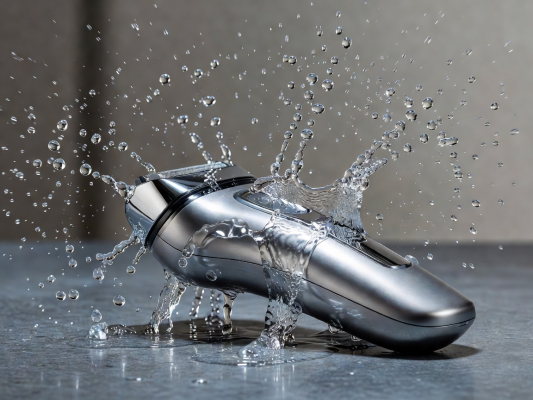
The Evolution of Waterproof Technology
Historically, mixing electricity and bathroom water was a recipe for disaster. Early electric grooming tools were strictly meant for dry usage, requiring users to shave prior to showering when the skin was free from moisture. However, advances in structural engineering, specifically the development of hermetically sealed chassis and rubberized internal gaskets, have given rise to the modern Wet/Dry shaver—a device fully capable of being submerged without compromising its internal electronics.
These devices utilize silicone O-rings around the drive shafts and ultrasonic welding on plastic seams to guarantee that moisture cannot reach the delicate lithium-ion battery or the printed circuit board. This waterproofing is often rated using the Ingress Protection (IP) scale, with most premium wet/dry models boasting an IPX7 rating, meaning they can safely withstand immersion in up to one meter of water for 30 minutes.
The Advantages of Wet Shaving
The primary benefit of a wet/dry device is versatility. The ability to take the unit into the shower drastically alters the grooming landscape. The humid environment of a hot shower acts as a natural steam treatment, softening the beard hairs and opening the pores. Hydrated hair is substantially weaker than dry hair, meaning the motor requires less torque to sever the follicle, resulting in a smoother action with less pulling.
Furthermore, wet usage allows for the introduction of shaving creams, gels, and foams. These lubricants create a microscopic barrier between the metal foils and the epidermis, drastically reducing the coefficient of friction. For individuals suffering from chronic razor burn or hyper-sensitive skin, the combination of a high-quality gel and a waterproof electric mechanism is often the most comfortable solution available.
Optimizing the Wet Experience
To maximize the efficacy of a wet shave, preparation and product choice are key. Heavy, thick lathers traditionally used with safety razors are actually detrimental to electric devices; the dense foam creates an airlock effect inside the cutting block, preventing hairs from entering the foil perforations. Instead, opt for thin, translucent gels or highly watered-down creams that provide slickness without the bulk.
Ensure that you rinse the head of the shaver frequently under the shower stream during operation. The combination of cut hair and gel will quickly form a paste that clogs the mechanism if not continuously flushed out.
The Safety Imperative
Because these devices are designed to operate in wet environments, strict international safety regulations govern their power delivery. By design, a genuine wet/dry shaver will completely disable its motor while the charging cable is connected. This hardwired safety lockout prevents users from inadvertently plugging the device into a wall outlet while standing in water, mitigating the risk of fatal electric shock.
Consequently, users must pay close attention to battery management. If you forget to charge the device and it dies halfway through a session, you cannot simply plug it in and finish the job; you must wait for it to gather a sufficient charge before the safety interlock will release the motor.