Why Maintenance Matters
An electric shaver is a precision instrument. The clearance between the rapidly moving cutting blades and the protective foil is often measured in fractions of a millimeter. When this microscopic gap becomes clogged with keratin debris, dead skin cells, and dried sebum, the motor must work harder to drive the blades. This leads to increased friction, elevated heat generation, and accelerated battery drain. More importantly, it drastically degrades the quality of the cut, leading to pulling, tugging, and skin irritation.
Daily Cleaning Protocols
After every single use, the device requires basic clearing. The method depends heavily on whether your device is rated for wet use and whether it includes an automated cleaning station.
Manual Dry Cleaning
If you prefer a dry routine, remove the shaver head or pop open the housing. Gently tap the plastic frame against the edge of a sink to dislodge loose hairs. Never tap the delicate foil mesh on a hard surface, as even minor dents can ruin the geometry and cause the underlying blades to scrape the metal, rendering the head useless.
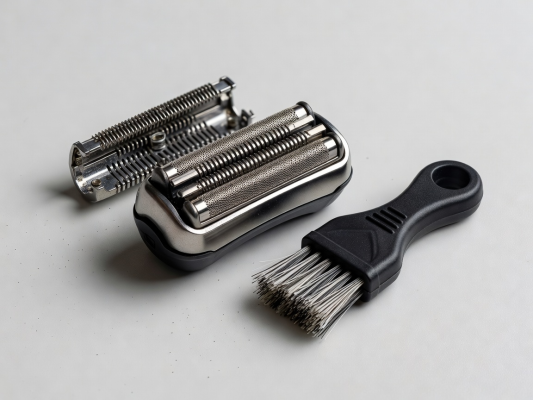
Use the small, stiff-bristled brush that came with the device to sweep the internal cutter blocks. Crucial Warning: Do not use the brush directly on the foils. The bristles can easily snag the microscopic perforations, tearing the ultra-thin metal.
Rinsing Under the Tap
For fully washable models, liquid cleaning is superior. Apply a single drop of liquid hand soap to the foils, add a splash of water, and turn the shaver on for ten seconds. The rapid motion of the blades will whip the soap into a micro-lather, degreasing the mechanical parts. Turn off the device, remove the head, and thoroughly rinse both the foils and the inner cutters under warm running water until all soap residue is gone. Leave it disassembled in a well-ventilated area to air dry completely.
Lubrication: The Secret to Longevity
Water and soap are excellent for removing organic debris, but they also strip away necessary mechanical lubricants. Metal rubbing against metal without lubrication generates destructive heat and premature wear.
Once a week, after the thoroughly cleaned shaver has completely dried, apply a single drop of highly refined, light machine oil (specifically formulated for shavers or clippers) to the outside of the foil. Turn the shaver on for a few seconds to allow the oscillating blades underneath to distribute the oil evenly across the friction points. Wipe away any excess oil with a tissue before your next use.
Automated Cleaning Stations
Many premium models include a base station that handles washing, lubricating, and drying automatically. These systems use an alcohol-based or detergent-based fluid cartridge. While they represent an ongoing cost, they are remarkably effective at maintaining day-one performance and sanitizing the head, which is highly beneficial for acne-prone skin. Ensure you replace the fluid cartridges exactly as directed—usually every 4 to 8 weeks, depending on frequency of use and ambient evaporation.
Replacement Intervals
Even with immaculate care, the metal components are consumable. The friction of daily use microscopically dulls the blades and thins out the foil barrier. As a general industry standard, it is recommended to replace the cutter block and foil assembly every 12 to 18 months. If you notice you are pressing harder to get a close cut, or if the device begins to pull hairs rather than slicing them, it is time for a replacement set.